
In India, dead stock is like that forgotten atta packet sitting in the back corner of your kitchen shelf, bought with good intentions, but never used. Now imagine that same problem happening inside your warehouse… with lakhs of rupees stuck in unsold inventory.
Painful, right?
Whether you run a manufacturing company in Rajkot, a trading business in Ahmedabad, or multiple warehouses across India, dead stock silently eats your profits every single day. It blocks cash flow, occupies warehouse space, increases storage costs, and creates unnecessary stress for your sales and purchase teams.
And here’s the shocking part, many Indian businesses don’t even realize how much money is trapped in dead stock until it becomes a major financial problem.
This is where inventory management software helps businesses take control of their stock.
What is Dead Stock in Inventory Management?
Dead stock refers to unsold inventory, raw materials, or expired goods that sit static in a warehouse for over 90 days without generating revenue. In Indian B2B operations, dead stock represents blocked working capital and direct operational loss due to rising warehousing overheads.In simple words:
Dead stock = Inventory that is not generating revenue.
Examples in Indian businesses include:
- Unsold machine spare parts in manufacturing units.
- Expired FMCG or chemical batches.
- Seasonal inventory that missed the market window.
- Excess raw materials were purchased blindly to claim bulk discounts.
Why Dead Stock is Dangerous for Indian Businesses?
Dead stock directly impacts:
| Problem | Business Impact |
| Blocked cash flow | Less working capital |
| Warehouse congestion | Reduced operational efficiency |
| Higher storage cost | Increased operational expenses |
| Inventory confusion | Poor planning decisions |
| Product damage or expiry | Financial losses |
| Incorrect forecasting | More overstocking |
For SMEs and manufacturers in India, where margins are already tight, dead stock can seriously affect profitability.
Why Indian Businesses Face Dead Stock Problems?
Many manufacturing and trading SMEs in Gujarat and across India struggle with inventory pile-ups due to disconnected operations. The core reasons include:
1. Manual Inventory Tracking:
Many companies still rely on Excel sheets or disconnected systems. Result?
- Human errors
- Duplicate entries
- Incorrect stock visibility
2. Poor Demand Forecasting:
Businesses purchase stock based on assumptions instead of actual sales data.
3. Lack of Real-Time Inventory Visibility:
Without proper ERP for inventory management, businesses don’t know:
- Which products are moving fast?
- Which items are slow-moving?
- What inventory should be reordered?
4. Over-Purchasing Raw Materials:
Many Indian manufacturers buy excessive inventory to “play safe”.
But eventually:
Safe stock becomes dead stock.
5. Unplanned Production:
Production without demand analysis creates finished goods that customers may never buy.
What is Inventory Management Software?
Inventory management software is a digital system that helps businesses track, manage, organize, and optimize stock across warehouses, stores, and production units.
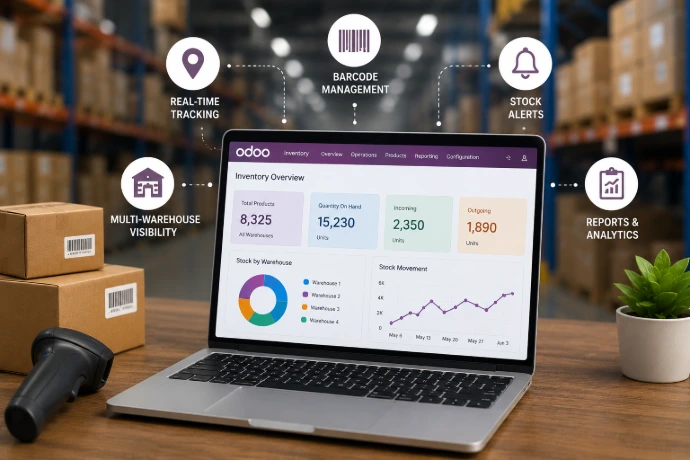
Modern systems like Odoo provide:
- Real-time stock tracking
- Barcode management
- Batch & serial number tracking
- Automated stock alerts
- Multi-warehouse visibility
- Purchase planning
- Demand forecasting
- Inventory valuation reports
In short:
It helps businesses maintain the right stock at the right time.
How Odoo Inventory Management Helps Avoid Dead Stock?
Odoo doesn’t just track your stock, it actively prevents inventory stagnation through automated, intelligent workflows.
1. Automated Reordering Rules (Min-Max Rules)
Instead of manual verification, you can set strict Minimum and Maximum stock thresholds inside Odoo. The moment a raw material drops to the minimum level, Odoo automatically triggers a Request for Quotation (RFQ) to your vendor. This prevents both panic over-purchasing and production delays.
2. Live Inventory Valuation and Aging Reports
Odoo’s advanced dynamic dashboards allow managers to generate an Inventory Aging Report with a single click. You can instantly filter out items that haven’t moved in the last 30, 60, or 90 days, enabling your sales team to liquidate slow-moving stock before it turns dead.
3. Smart Demand Forecasting via Sales Integration
By connecting Odoo Sales with Odoo Inventory, the system analyzes seasonal buying patterns. For example, a pump manufacturer in Gujarat will see higher demand trends just before the monsoon. Odoo flags this to prevent overstocking during the off-season.
4. ABC Inventory Analysis:
Odoo automatically categorizes your warehouse items into three distinct zones based on value and turnover:
| Category | Meaning |
| A Items | High-value fast-moving products |
| B Items | Medium-demand products |
| C Items | Slow-moving low-value inventory |
This helps companies focus on profitable inventory instead of wasting money on slow-moving products.
Step-by-Step Guide to Avoid Dead Stock Using Odoo ERP Software
Now let’s discuss the actual implementation process.
Step 1: Audit Your Current Inventory
Start by identifying:
- Non-moving items
- Expired inventory
- Overstocked materials
- Duplicate stock
Questions to ask:
- Which products have not been sold or used in the last 90 days?
- Which items occupy the maximum warehouse space?
- Which raw materials are over-purchased?
Step 2: Categorize Inventory Properly
Use categories like:
- Fast-moving
- Slow-moving
- Seasonal
- Non-moving
- Critical inventory
This improves visibility and planning accuracy.
Step 3: Implement Barcode Tracking
Barcode systems reduce:
- Manual errors
- Wrong stock entries
- Inventory mismatch
With Odoo barcode integration, businesses can update stock instantly using mobile devices.
Step 4: Set Inventory Alerts
Configure alerts for:
- Slow-moving inventory
- Low stock
- Excess stock
- Near-expiry products
This helps management take immediate action.
Step 5: Monitor Inventory Reports Weekly
Most businesses install software but never analyze reports.
Big mistake.
Track:
- Inventory turnover ratio
- Dead stock value
- Warehouse utilization
- Product movement trends
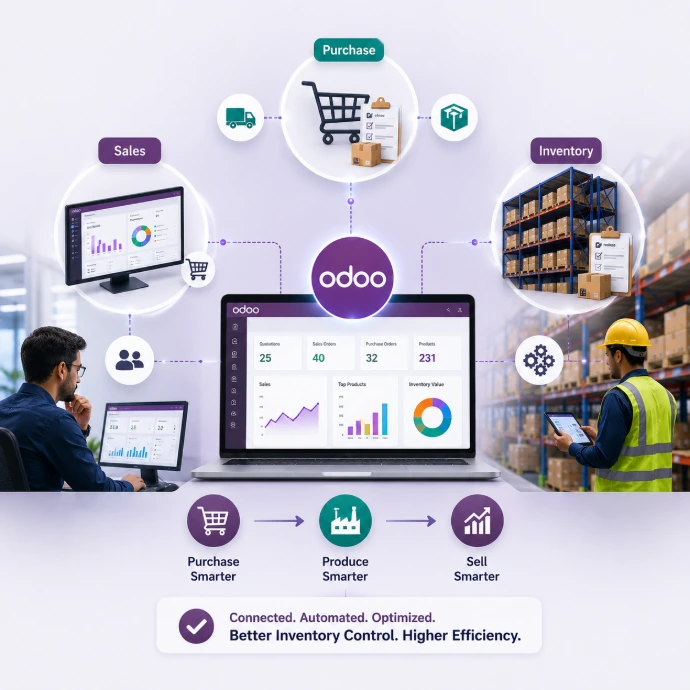
Step 6: Integrate Sales, Purchase & Inventory
Disconnected departments create inventory chaos.
When sales, purchase, and inventory are connected inside Odoo ERP Software, businesses can:
- Purchase smarter
- Produce smarter
- Sell smarter
This improves operational efficiency significantly.
Why Odoo ERP Software is Ideal for Indian Businesses?
Indian businesses need flexibility.
And that’s exactly where Odoo performs well.
Benefits of Odoo ERP for Inventory Management in India
| Feature | Benefit |
| Multi-warehouse support | Perfect for interstate businesses |
| GST-ready integration | Better compliance |
| Real-time inventory | Faster decisions |
| Scalable ERP modules | Business growth support |
| Manufacturing integration | Production planning optimization |
| Mobile accessibility | Easy warehouse operations |
Signs Your Business Needs Inventory Management Software
If you face these issues regularly, it’s time to upgrade:
- Frequent stock mismatch
- Dead stock accumulation
- Delayed deliveries
- Inventory confusion
- Excess warehouse costs
- Manual Excel dependency
- Poor purchase planning
- Slow stock tracking
If your team spends more time searching for stock than selling products, your inventory system needs immediate improvement.
Conclusion
Dead stock is not just an inventory issue, it’s a profitability issue.
In today’s competitive Indian market, businesses cannot afford to lock money inside unsold inventory while operational costs continue rising. Smart inventory planning is no longer optional.
With the right inventory management software, businesses can gain complete stock visibility, improve forecasting, optimize warehouse operations, and avoid unnecessary inventory losses.
That’s where Teknovative Solution helps businesses transform their operations using smart Odoo solutions tailored for Indian manufacturers and traders.
If you want to reduce dead stock, improve inventory accuracy, and build a smarter business operation, now is the right time to modernize your inventory management process.
Read Also: Why 70% of Manufacturing Companies Are Switching from Tally & SAP to Odoo ERP Software in 2026
Is your hard-earned capital rotting away as dead stock?
Stop letting messy spreadsheets freeze your cash flow. Switch to Odoo with Teknovative Solution and automate your inventory tracking today.
Rapid Assistance Zone
Dead stock refers to products or materials that remain unsold or unused for a long period and do not generate revenue for the business.
WMS helps reduce dead stock by tracking inventory in real time, improving demand forecasting, and identifying slow-moving products before they become excess inventory.
Yes. Odoo is highly suitable for Indian manufacturers because it supports multi-warehouse operations, GST integration, barcode tracking, and manufacturing workflows.
ERP for inventory management improves stock accuracy, reduces excess inventory, minimizes manual errors, enhances warehouse efficiency, and supports better business decisions.
Small businesses can reduce dead stock by tracking inventory regularly, analyzing sales trends, setting reorder limits, and using smart stock management software.
Manufacturing, trading, distribution, retail, FMCG, engineering, electronics, and warehouse-driven businesses benefit significantly from Odoo.