
In the rapidly evolving automobile manufacturing industry, staying competitive requires adopting advanced technologies and innovative solutions. Lean-based Enterprise Resource Planning (ERP) software is one such transformative solution that has become crucial for modern automobile manufacturers. This blog will explore the top 8 benefits of lean-based ERP software for automobile manufacturers, highlighting why it’s a game-changer for your business.
Understanding Lean-Based ERP Software
Lean-based ERP software integrates the principles of Lean manufacturing, such as maximizing value, reducing waste, and implementing continuous improvement using standard ERP features. Unlike traditional ERP systems, which usually focus on combining various business processes, Lean-based ERP prioritizes effectiveness and the elimination of non-value-adding activities.
Why Do Automobile Manufacturers Need Lean-based ERP?
Automobile manufacturers need Lean ERP software to increase efficiency and quality. It simplifies production, reduces waste, and enhances flexibility, ensuring they stay ahead in the fast-paced auto industry. By optimizing every process from inventory to customer delivery, it transforms challenges into competitive advantages, driving growth and innovation.
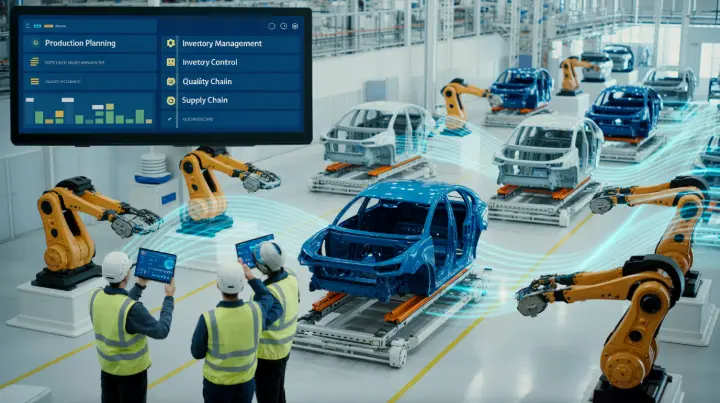
Top 8 Benefits of Lean ERP Solutions for the Automotive Sector
(1) Streamlined Production Processes:
- Efficient Workflow Management: ERP software improves efficient workflow management by automating various production processes. This leads to a better manufacturing flow, fewer errors, and less personal involvement. By simplifying these methods, manufacturers can achieve higher productivity and faster turnaround times.
- Reduced Downtime: One of the important advantages of Lean ERP software is its ability to minimize downtime. The technology can predict maintenance requirements and plan them at times of low demand, ensuring that machinery and production lines remain operational for longer periods.
(2) Enhanced Quality Control:
- Real-time Monitoring: With a Lean-based ERP system, real-time monitoring of production processes becomes possible. This allows manufacturers to detect and address quality issues immediately, ensuring that only the best products reach the market.
- Automated Quality Checks: Automated quality checks built into the manufacturing ERP system help maintain high standards throughout the production process. These examinations can identify defects early, reducing the risk of recalls and enhancing overall product quality.
(3) Optimized Inventory Management:
- Just-in-Time Inventory: Lean-based ERP software supports Just-in-Time (JIT) inventory management, providing that materials are available only when needed. This reduces inventory carrying costs and minimizes the risk of obsolescence.
- Minimized Overstock and Shortages: By accurately forecasting demand and managing inventory levels, Lean ERP software helps control overstocking and shortages. This balance leads to cost savings and better resource utilization.
(4) Improved Supplier Collaboration:
- Integrated Supply Chain: An integrated supply chain facilitated by manufacturing ERP software provides seamless communication and collaboration with suppliers. This integration leads to more efficient procurement processes and better inventory management.
- Better Communication with Suppliers: Lean-based ERP systems provide a platform for real-time communication with suppliers, enhancing clarity and collaboration. This improved communication helps in maintaining a constant flow of materials and meeting production deadlines.
(5) Cost Reduction:
- Lower Operational Costs: By streamlining processes and reducing waste, Lean-based ERP solutions significantly lower operational costs. This cost efficiency enables manufacturers to invest more in innovation and growth.
- Waste Minimization: Lean principles that are incorporated in the ERP software focus on minimizing waste, whether it's time, materials, or labor. This waste reduction contributes to a more tolerable and cost-effective manufacturing process.
(6) Enhanced Customer Satisfaction:
- Faster Response Times: Lean ERP software enhances customer satisfaction by improving response times. Faster production cycles and timely deliveries mean customers receive their products sooner, leading to higher satisfaction levels.
- Improved Product Quality: Consistent quality control facilitated by the ERP system ensures that customers receive high-quality products every time. This trustworthiness builds customer trust and loyalty.
(7) Better Decision Making:
- Real-time Data Access: Access to real-time data is a game-changer for decision-making. ERP software provides managers with up-to-date information, allowing them to make informed decisions that drive efficiency and growth.
- Advanced Analytics: Advanced analytics tools within the manufacturing ERP system help manufacturers identify trends, predict future demands, and optimize production processes. This data-driven approach leads to smarter business strategies and improved performance.
(8) Scalability:
- Support for Business Growth: As automobile manufacturers grow, their operational needs evolve. Lean ERP software is scalable, supporting business growth without requiring a complete system overhaul.
- Easy Integration of New Modules: The modular nature of manufacturing ERP software allows manufacturers to integrate new functionalities as needed. This flexibility ensures that the system can evolve with the business, providing long-term value.
Final Takeaway
Lean ERP software is a powerful tool for automobile manufacturers, offering numerous benefits from enhanced efficiency and quality control to cost reduction and competitive advantage. By integrating Lean principles with ERP functionalities, manufacturers can revolutionize their operations, meet market demands more effectively, and achieve sustainable growth.
Discover how our lean-based ERP software can revolutionize your automobile manufacturing operations. Let’s schedule a business consultation call with our industry expert worth Rs 5,000 @ no cost and take the first step towards operational excellence and sustainable growth.
Is a broken system stopping your machines?
Missing parts and manual tracking cost lakhs every hour. Automate your floor right now.
The Ultimate Reference
ERP improves efficiency by automating workflows, optimizing production scheduling, and reducing downtime, helping manufacturers achieve faster and smoother operations.
Real-time data allows manufacturers to track production, monitor quality, and make instant decisions, reducing delays and improving overall operational control.
A lean-based ERP system reduces costs by eliminating waste, optimizing resource usage, and improving inventory control, which directly lowers operational expenses.
Yes, ERP improves quality through real-time monitoring, automated quality checks, and process standardization, ensuring consistent product output and fewer defects.
ERP integrates the entire supply chain, enabling better communication with suppliers, accurate demand forecasting, and timely material availability for smooth production flow.
ERP helps deliver faster production, on-time delivery, and consistent quality, which leads to improved customer trust and long-term relationships.
Yes, modern ERP systems are designed to scale with business growth, allowing manufacturers to add new modules, processes, and capabilities without disrupting operations.
Manufacturers can start by analyzing current inefficiencies and implementing a customized solution like Odoo ERP, which aligns production, inventory, and sales for better control and growth.