
What is Odoo?
Odoo Offers A Range of Features
- A modular approach to functionality that allows businesses to add or remove modules based on their specific needs.
- A range of applications that can be used to manage a variety of business processes, including sales, marketing, accounting, inventory management, and HR.
- Customizable dashboards that provide a real-time overview of key business metrics.
- Integration with a range of third-party applications, including payment gateways, shipping providers, and e-commerce platforms.
- Multi-language and multi-currency support.
- A user-friendly interface that can be easily customized to meet the needs of individual users.
- Access to a community of developers who contribute to the platform's ongoing development.
How Does Odoo Work?
Key Features of Odoo
Customizable Dashboards:
Modular Design:
Range of Applications:
Integration with Third-Party Applications:
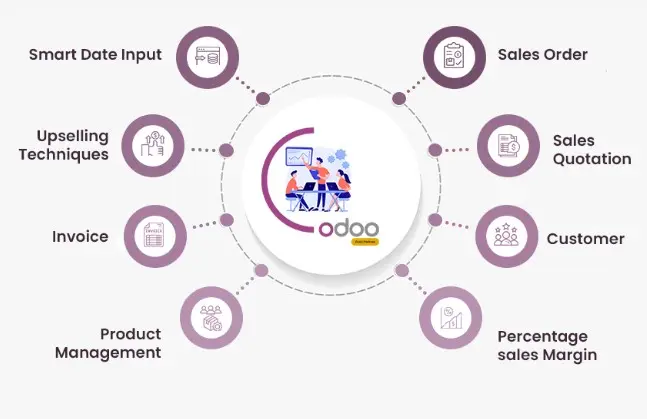
Multi-Language and Multi-Currency Support:
User-Friendly Interface:
Access to a Community of Developers:
Benefits of Odoo
Cost-Effective:
Scalability:
Integration:
User-friendly Interface:
Real-time Data:
Community Support:
Conclusion
Why pay for 10 different softwares when Odoo does it all?
Curious Minds Want to Know
Odoo is called all-in-one because it combines multiple business functions like sales, accounting, inventory, HR, and CRM into a single platform instead of using separate tools.
Odoo can automate order processing, invoicing, inventory updates, reporting, and customer follow-ups, helping businesses reduce manual work and improve speed.
Its modular structure allows businesses to start with only the features they need and add more as they grow, avoiding unnecessary complexity and cost.
Unlike traditional ERP systems, Odoo is flexible, user-friendly, and easier to customize, making it suitable for both small and growing businesses.
Odoo connects all departments into one system, so data updates in real time—giving complete visibility into operations, finances, and performance.
Key features include real-time dashboards, integrated applications, automation tools, multi-currency support, and customizable workflows that adapt to business needs.
By centralizing all data in one system, Odoo eliminates duplicate entries, miscommunication, and dependency on multiple software tools.
The biggest advantage is scalability—businesses can expand operations, add new modules, and handle growth without switching systems.