
Introduction: What is The Fusion of Lean and ERP?
Understanding Lean Manufacturing Systems
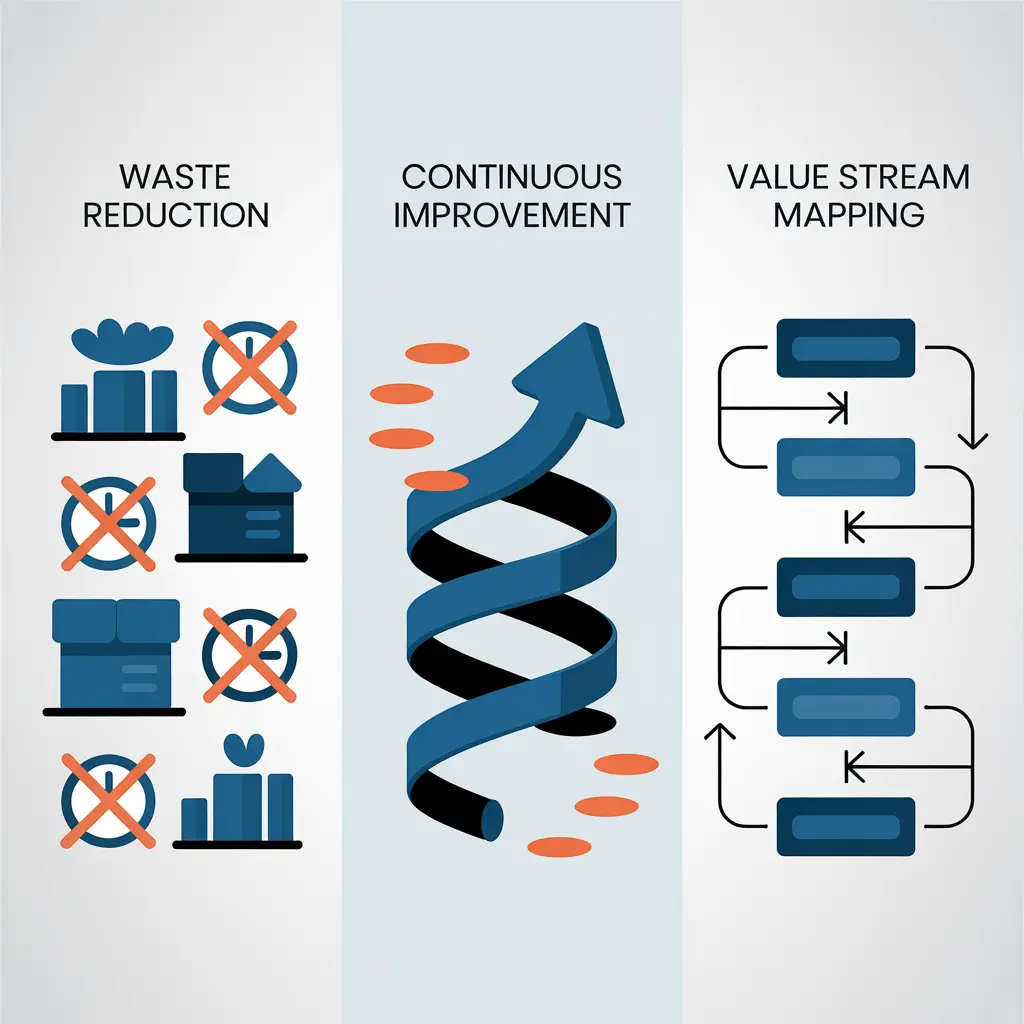
(1) Waste Reduction:
(2) Continuous Improvement:
(3) Value Stream Mapping:
The Integration of Lean with ERP Systems
(1) Streamlined Operations:
(2) Optimized Inventory Management:
(3) Enhanced Quality Control:
(4) Data-Driven Decision Making:
Case Study: Transforming Business in a Lean Manufacturing System with ERP
Challenge:
Solution:
Results:
- Reduced production lead times by 21%
- Cut inventory holding costs by 25%
- Improved product quality with a 20% decrease in defects
- Enhanced on-time delivery performance to 95%
Conclusion
Tired of constantly chasing your team for updates?
Stop manual tracking. Put an end to daily follow-ups by bringing your production, inventory, and dispatches onto one simple live screen.
Frequently Asked Questions Manual
A lean-based ERP improves performance by streamlining workflows, reducing non-value activities, and aligning operations with real demand, helping businesses operate faster and more efficiently.
In modern systems, “lean” means eliminating waste, improving process flow, and focusing only on activities that create value for customers, rather than just managing data.
ERP supports continuous improvement by tracking performance data, identifying inefficiencies, and enabling ongoing process optimization, which is a core principle of lean operations.
Yes, by providing real-time data across departments, ERP allows businesses to make faster, more accurate decisions without relying on outdated or manual reports.
ERP systems connect sales, inventory, and production planning, ensuring that production is aligned with actual customer demand instead of guesswork or overproduction.
ERP reduces operational costs by minimizing waste, improving resource utilization, and reducing manual errors, which directly improves profitability over time.
Better visibility helps businesses identify bottlenecks, track performance in real time, and take corrective actions quickly, leading to smoother and more controlled operations.
When processes are optimized and waste is reduced, businesses can deliver faster, maintain consistent quality, and scale operations without increasing complexity, creating a strong foundation for sustainable growth.