
Indian factories produce everything from biscuits and essential medicines to automobiles, plastic components, and precision machinery, with each product following a distinct path from raw materials to final production.
Production across industries depends on batch histories, tracking product expiration dates, and following predetermined formulas. Another may assemble hundreds of components in a specific sequence. Plastic manufacturers shape granules into components through molding processes, whereas jewelry makers must carefully monitor even tiny quantities of valuable materials.
This variety gives India’s manufacturing sector its distinct character across industries. Food, pharmaceuticals, automobiles, electronics, chemicals, packaging, furniture, and other industries each follow their own production logic. How do different manufacturing industries function, and how can Manufacturing ERP Software meet their specific operational needs? Let’s explore.
What Goes Into Efficient Manufacturing Beyond Production?
Indian manufacturers often lose profit through excess material consumption, stock mismatches, machine downtime, rejected products, and inaccurate production costing. Manufacturing ERP Software links inventory, production, quality, maintenance, and accounting to help manufacturers identify and control operational issues.
Odoo ERP software can support these workflows through manufacturing orders, Bills of Materials (BoMs), stock tracking, quality checks, and cost records. The exact solution depends on each industry’s production process, data quality, and implementation requirements.
How Manufacturing ERP Software Supports Different Industries in India
The following sections show how Odoo ERP software can handle industry-specific needs through tailored workflows.
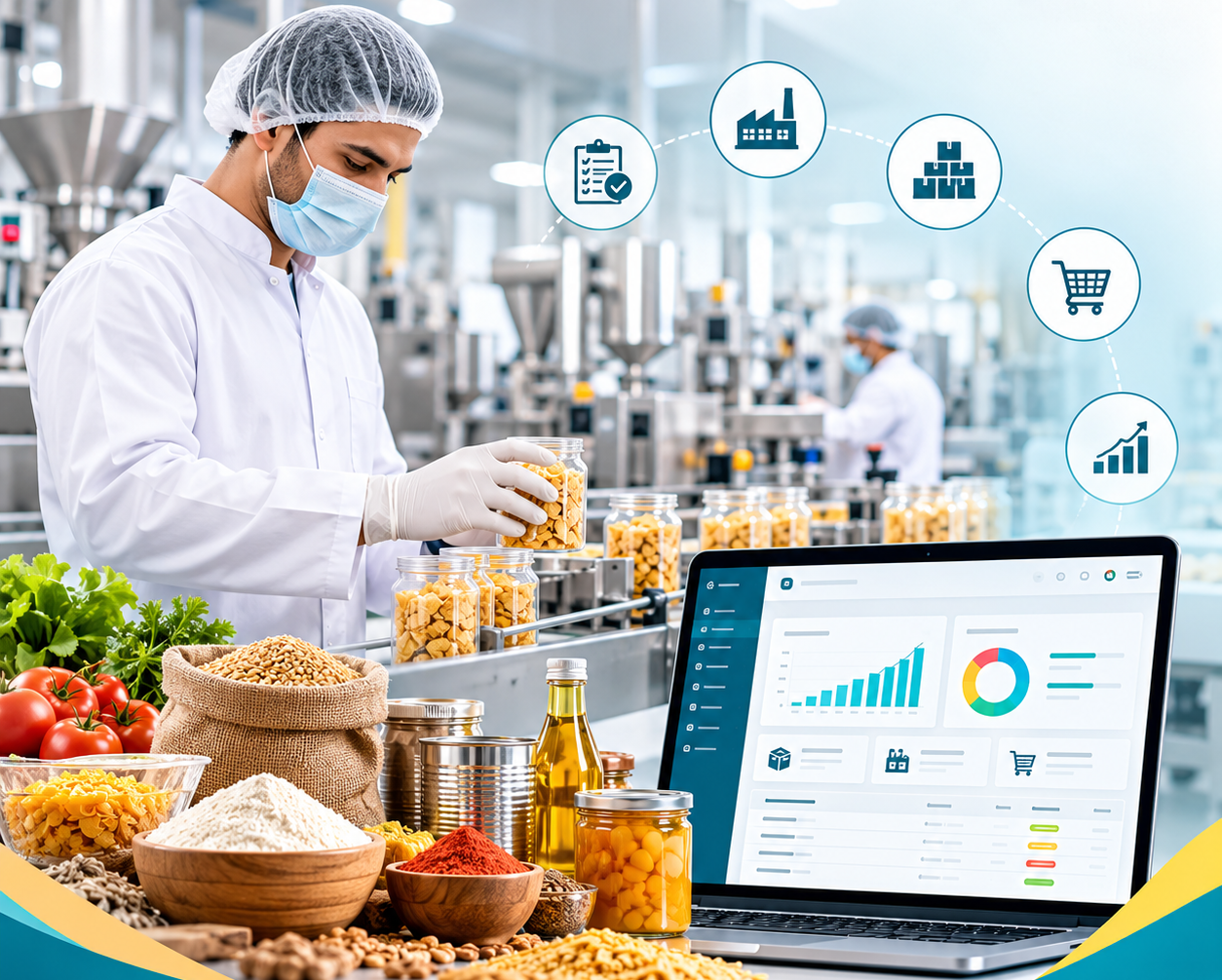
1. ERP for Food Manufacturing:
Food manufacturers manage ingredients, recipes, shelf life, production yields, and batch traceability. Poor planning can cause spoilage, inconsistent batches, and delivery delays.
| Manufacturing challenge | Manufacturing ERP workflow | Expected benefit |
| Ingredients expire before production | Inventory lots, expiration dates, replenishment rules, and stock rotation processes | Less avoidable spoilage and better stock utilisation |
| Incorrect recipes or ingredient quantities | Manufacturing BoMs, configured formulations, manufacturing orders, and recorded consumption | Better recipe consistency and material reconciliation |
| Production losses or quality failures | Quality checks, rejection records, and configured yield and scrap tracking | Improved quality visibility and investigation of production losses |
| Difficult batch recalls | Lot tracking across relevant stock movements and manufacturing records | Faster identification of affected batches when records are complete |
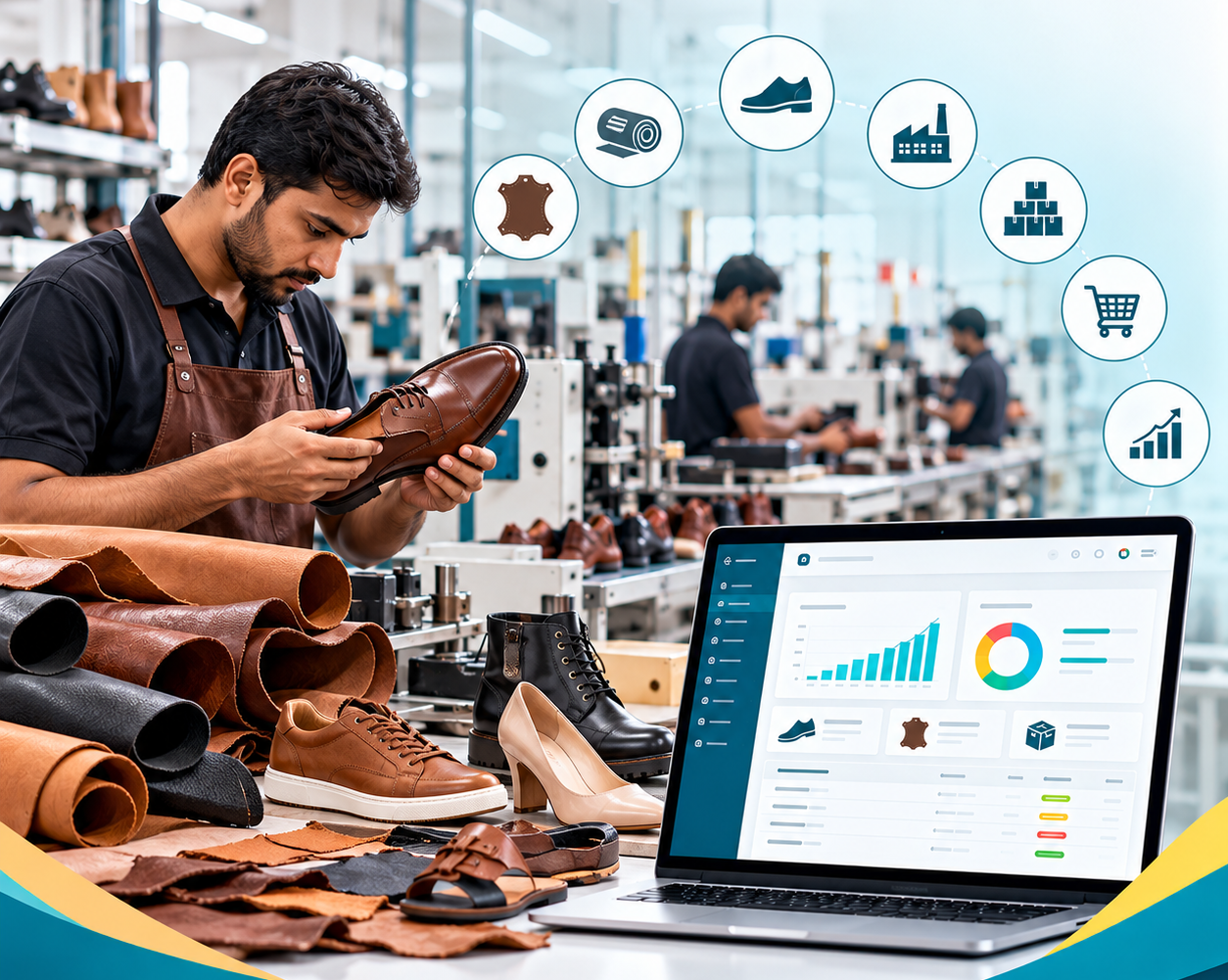
2. ERP for Leather and Footwear Manufacturing:
Leather and footwear manufacturers handle hides, sheets, soles, adhesives, and size and colour variations. Material quality and cutting efficiency directly influence product costs.
| Manufacturing challenge | Manufacturing ERP workflow | Expected benefit |
| Uneven material quality or excess cutting waste | Inventory tracking, BoMs, quality inspections, and configured scrap reasons | Better visibility into material losses |
| Confusion between sizes, colours, and designs | Product attributes, variants, and variant-specific BoMs where appropriate | Fewer picking and production errors |
| Shortages of soles, fittings, or adhesives | Replenishment rules, stock reservations, and manufacturing orders | Fewer avoidable production interruptions |
| Unclear costs across footwear styles | Material consumption, operation costs where configured, and Accounting reports | Better product-wise cost estimation |
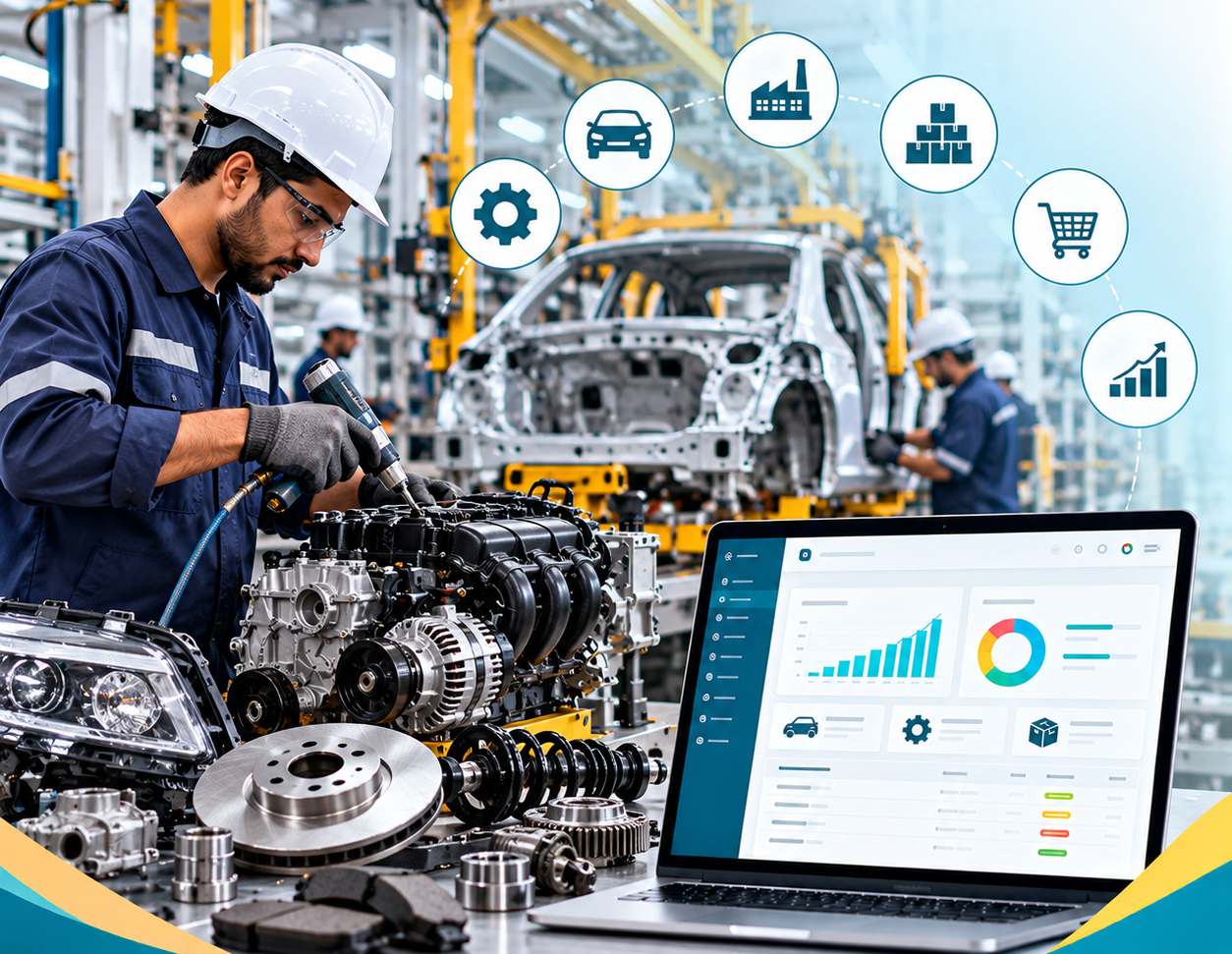
3. ERP for Automobile Manufacturing:
Automotive manufacturers coordinate components, suppliers, assembly operations, inspections, and delivery schedules. Production can stall when parts are unavailable or unexpected equipment downtime disrupts the workflow.
| Manufacturing challenge | Manufacturing ERP workflow | Expected benefit |
| Shortages of components delay assembly | Multi-level BoMs, replenishment, stock reservations, and manufacturing orders | Improved component availability planning |
| Supplier delays affect production schedules | Purchase workflows, supplier lead-time settings, and demand planning | Earlier visibility into supply risks |
| Rejected components require rework | Quality checks, non-conformity records, and configured rework operations | Better defect tracking and reduced repeat errors |
| Difficulty tracking finished goods | Lot or serial number tracking across manufacturing and inventory processes | Improved traceability and easier quality issue investigation |
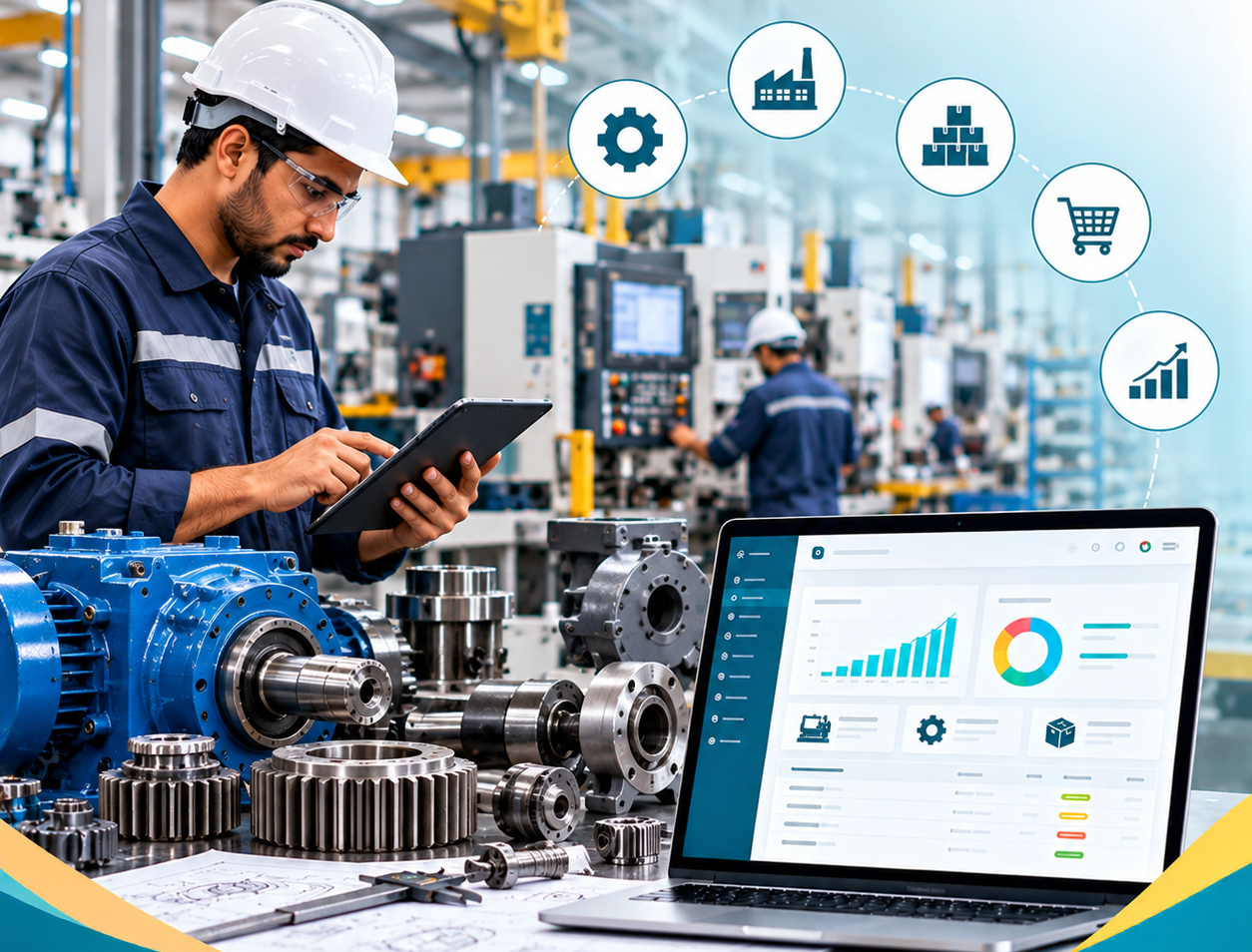
4. ERP for Machinery and Industrial Equipment Manufacturing:
Machinery manufacturers build products using numerous components, fabricated parts, electrical systems, and assembly operations. Long production cycles make material planning and job costing particularly important.
| Manufacturing challenge | Manufacturing ERP workflow | Expected benefit |
| Components are unavailable at the start of assembly. | Multi-level BoMs, procurement planning, replenishment, and manufacturing orders | Reduced delays caused by material shortages |
| Poor coordination between assembly operations | Work orders, routing, work centres, and operation sequencing | Improved visibility into production operations |
| Project costs exceed estimates | Material consumption, recorded labour or operation costs where configured, and Accounting reports | Improved job costing and margin analysis |
| Poor tracking of equipment maintenance and servicing | Maintenance requests, equipment records, and preventive maintenance schedules | Better maintenance coordination and clearer equipment status |
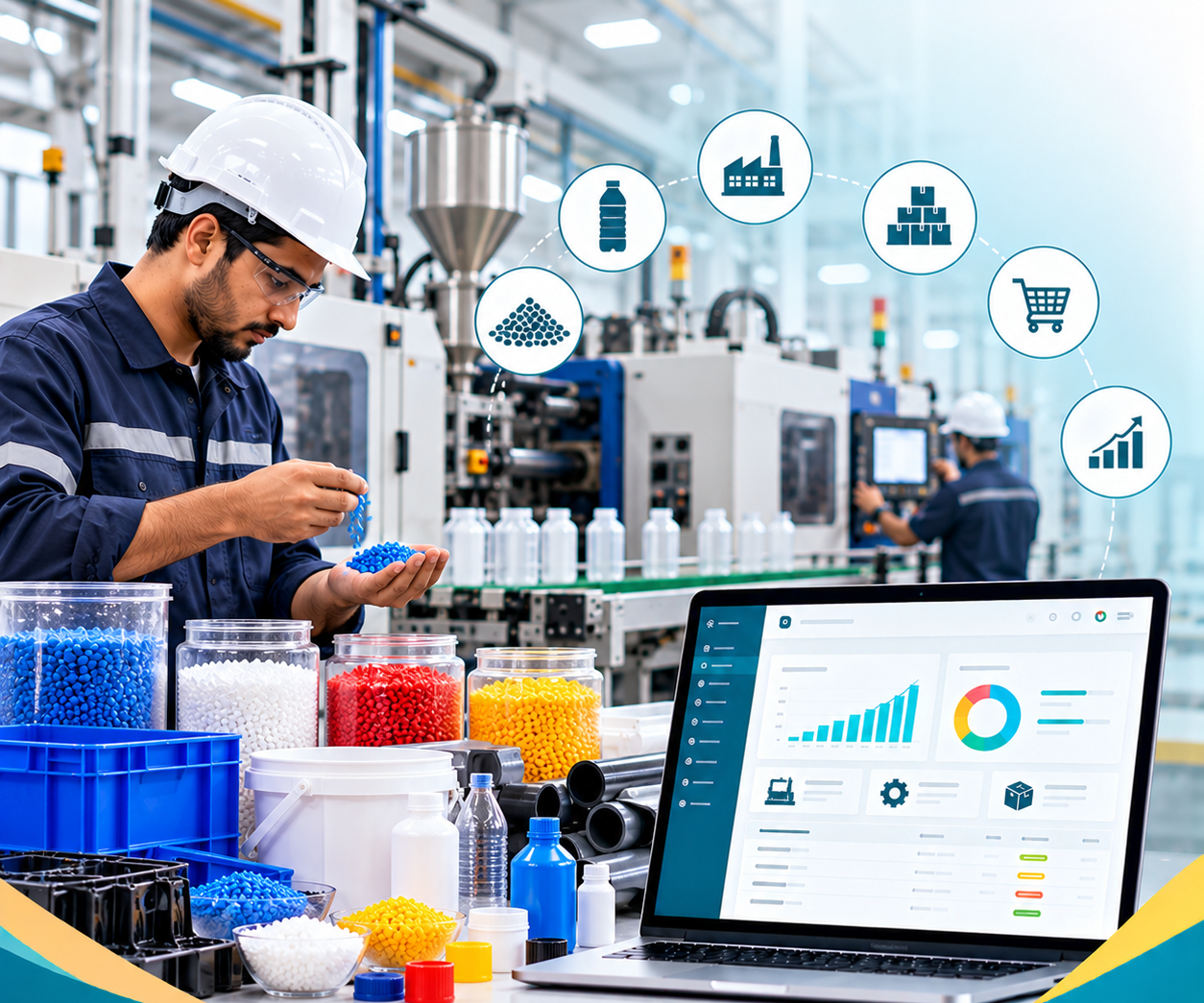
5. ERP for Plastic Manufacturing:
Plastic manufacturers manage resin grades, colour changes, moulds, production scrap, and machine utilisation. Inaccurate consumption records can make the actual cost of each batch difficult to determine.
| Manufacturing challenge | Manufacturing ERP workflow | Expected benefit |
| Excessive consumption of resin or colouring materials | Bills of Materials (BoMs), manufacturing orders, recorded material consumption, and scrap reasons | Better tracking of material consumption |
| Machine breakdowns interrupt production | Maintenance schedules, equipment records, and maintenance requests | Improved maintenance planning |
| Rejected parts are not analysed by cause | Quality checks and configured rejection or scrap categories | Better defect analysis and waste control |
| Product costs do not account for actual production losses | Recorded material use, operation costs where configured, and Accounting reports | More accurate product costing |
Is Your Manufacturing Process Ready for Better Control?
Explore how Odoo ERP can fit your production, inventory, and costing workflows. Find an approach that matches your industry's specific manufacturing requirements.
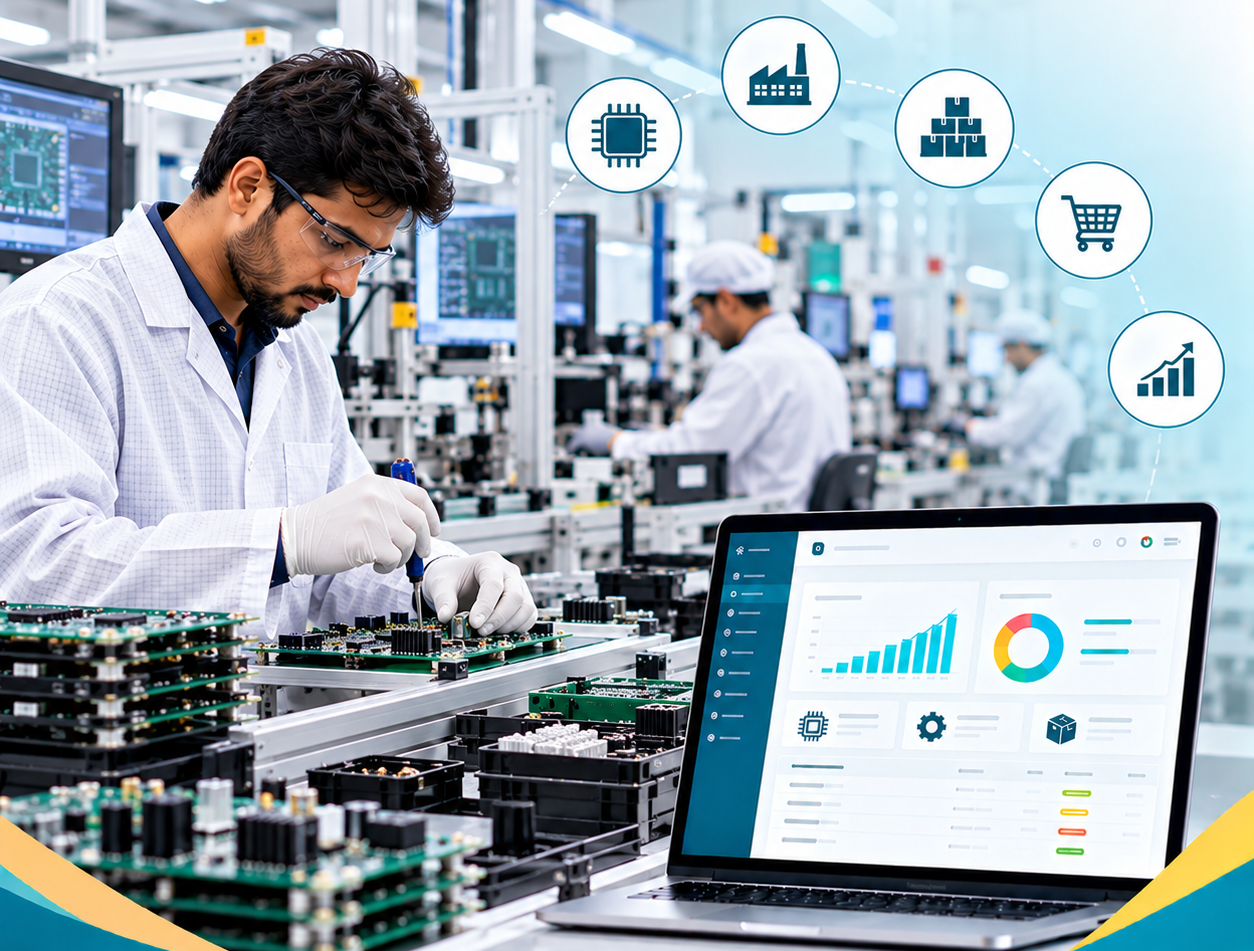
6. ERP for Electronics Manufacturing:
Electronics manufacturing depends on accurate component selection, assembly instructions, testing, and traceability. Even minor component defects can disrupt assembly and increase rework costs.
| Manufacturing challenge | Manufacturing ERP workflow | Expected benefit |
| Electronic components are missing or incorrectly picked | Component-level BoMs, stock reservations, and replenishment | Fewer avoidable assembly delays |
| Difficulty distinguishing similar components | Product variations, internal codes, and defined identification procedures | More accurate component selection |
| Test failures are not associated with specific production batches | Quality inspections, serial tracking, and test records | Easier defect investigation |
| Finished products cannot be traced back to their components | Lot and serial number tracking across manufacturing and inventory | Improved traceability and recall management |
7. ERP for Pharmaceutical Manufacturing:
Pharmaceutical manufacturing requires controlled material usage, batch records, expiry management, quality inspections, and reliable documentation. Errors during processing can compromise product quality and delay production release.
| Manufacturing challenge | Manufacturing ERP workflow | Expected benefit |
| Raw materials cannot be reconciled easily | Lot tracking, manufacturing orders, BoMs, and recorded material consumption | Better batch-level material visibility |
| Expired materials enter production planning | Expiration dates, stock controls, and configured reservation procedures | Lower risk of avoidable material errors |
| Quality inspections delay batch release | Quality checks, inspection records, and configured approval workflows | Better visibility into inspection status |
| Production documentation is incomplete | Structured manufacturing records and configured document-control processes | More consistent documentation and fewer process gaps |

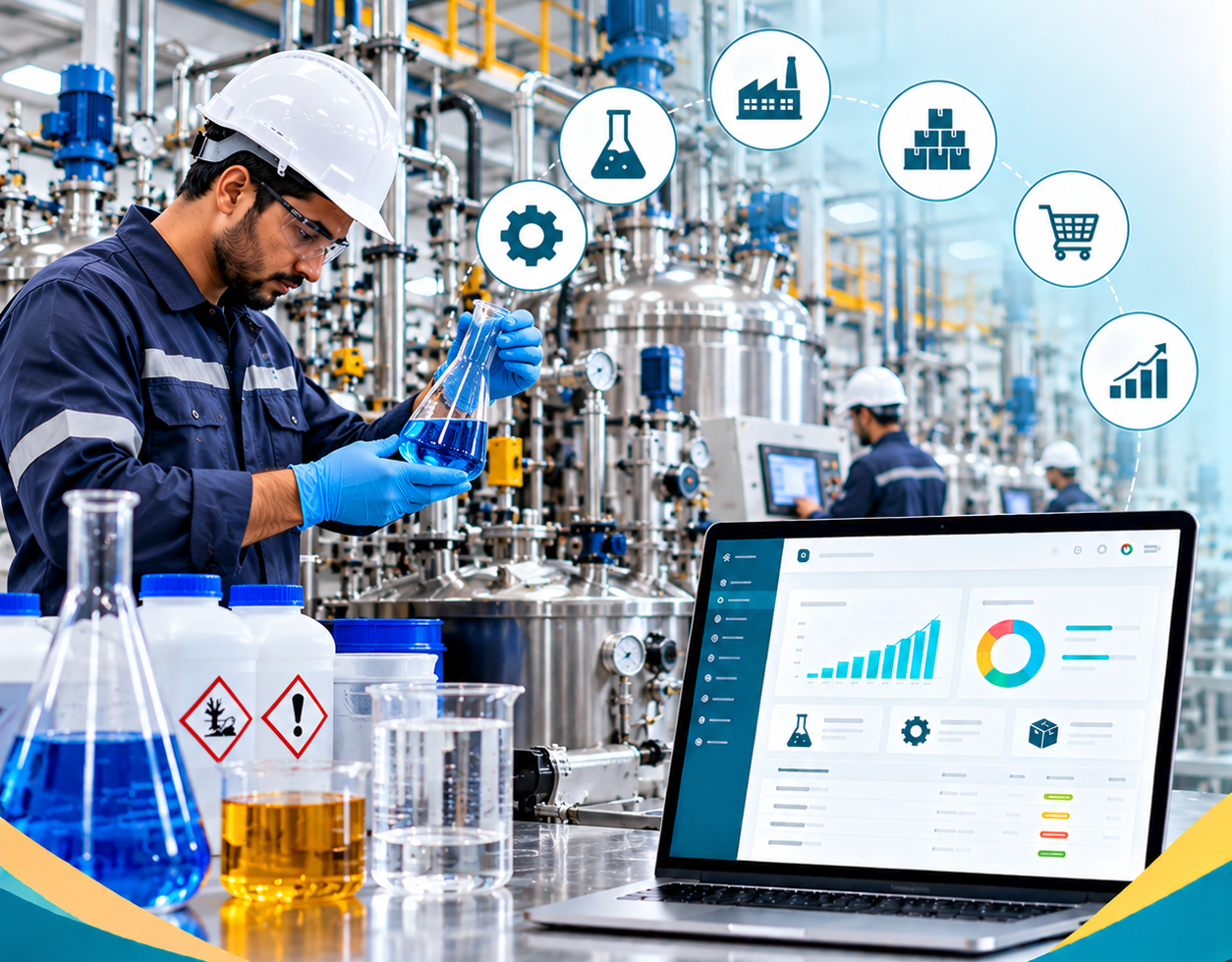
8. ERP for Chemical Manufacturing:
Chemical manufacturers manage formulations, hazardous or sensitive materials, batch processes, storage conditions, and variable production yields. Wrong quantities and limited traceability can lead to material waste and operational risks.
| Manufacturing challenge | Manufacturing ERP workflow | Expected benefit |
| Formulation quantities vary between batches | BOMs or configured formulation workflows, manufacturing orders, and recorded consumption | Better material reconciliation |
| Actual batch output differs from planned quantities | Production output, scrap, and yield recording | Easier identification of production losses |
| Storage and expiry requirements are missed | Lot tracking, expiration management where applicable, and configured storage rules | Better inventory control |
| Equipment problems disrupt production | Maintenance requests, preventive schedules, and equipment records | Better maintenance planning and production continuity |
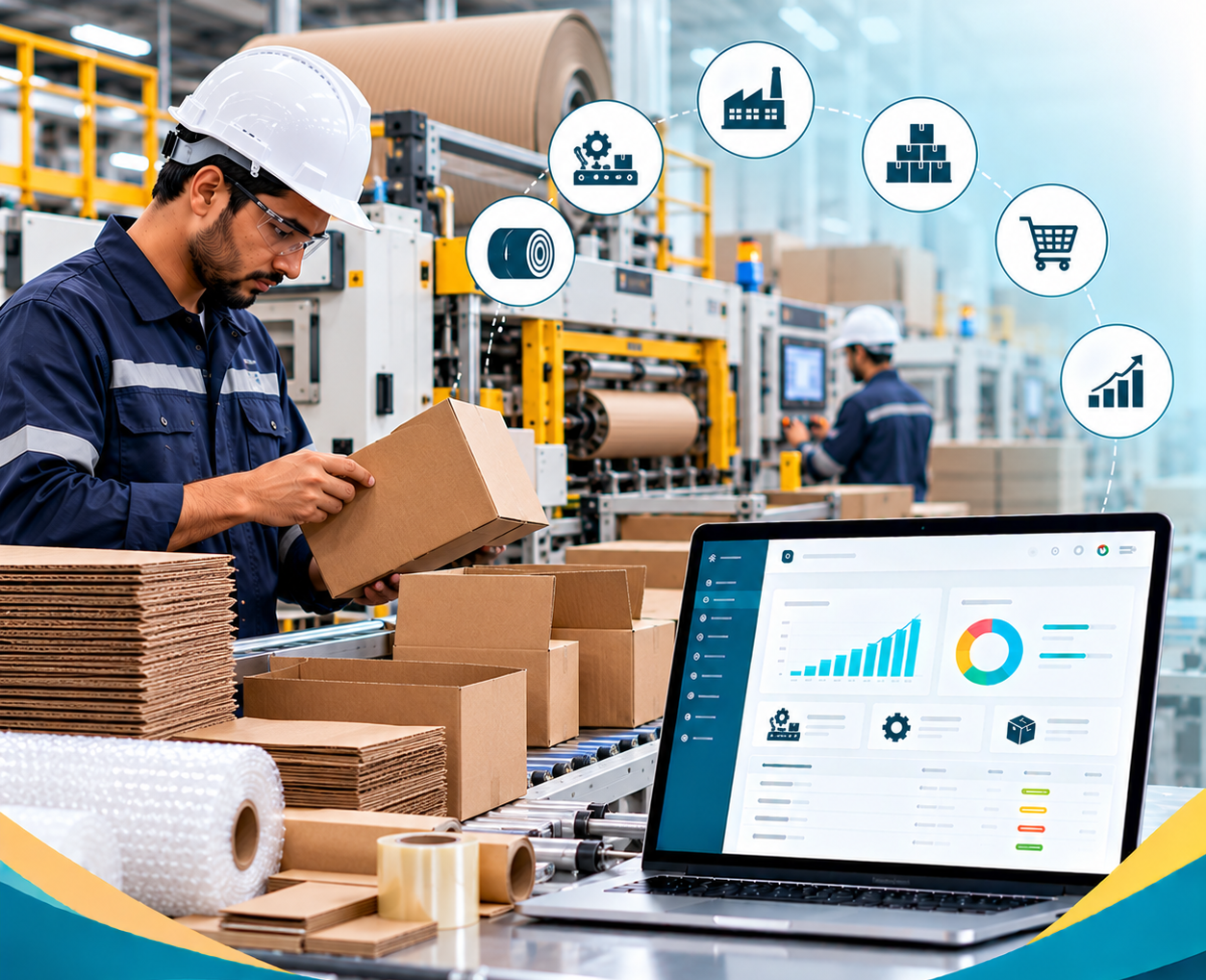
9. ERP for Packaging Manufacturing:
Packaging manufacturers process paper, board, films, and labels, where incorrect sizing, printing defects, material waste, and machine downtime can reduce order profitability.
| Manufacturing challenge | Manufacturing ERP workflow | Expected benefit |
| Excessive consumption of board or film | BoMs, manufacturing orders, material consumption, and scrap records | Improved material utilisation |
| Printing or sizing defects result in rejected products | Quality inspections, defined criteria, and rejection records | Improved defect tracking |
| Delays occur between production stages | Routing, work orders, and work-centre planning | Clearer visibility into production progress |
| Order margins are inaccurate | Order-specific material consumption and configured production-cost reporting | Better order profitability analysis |
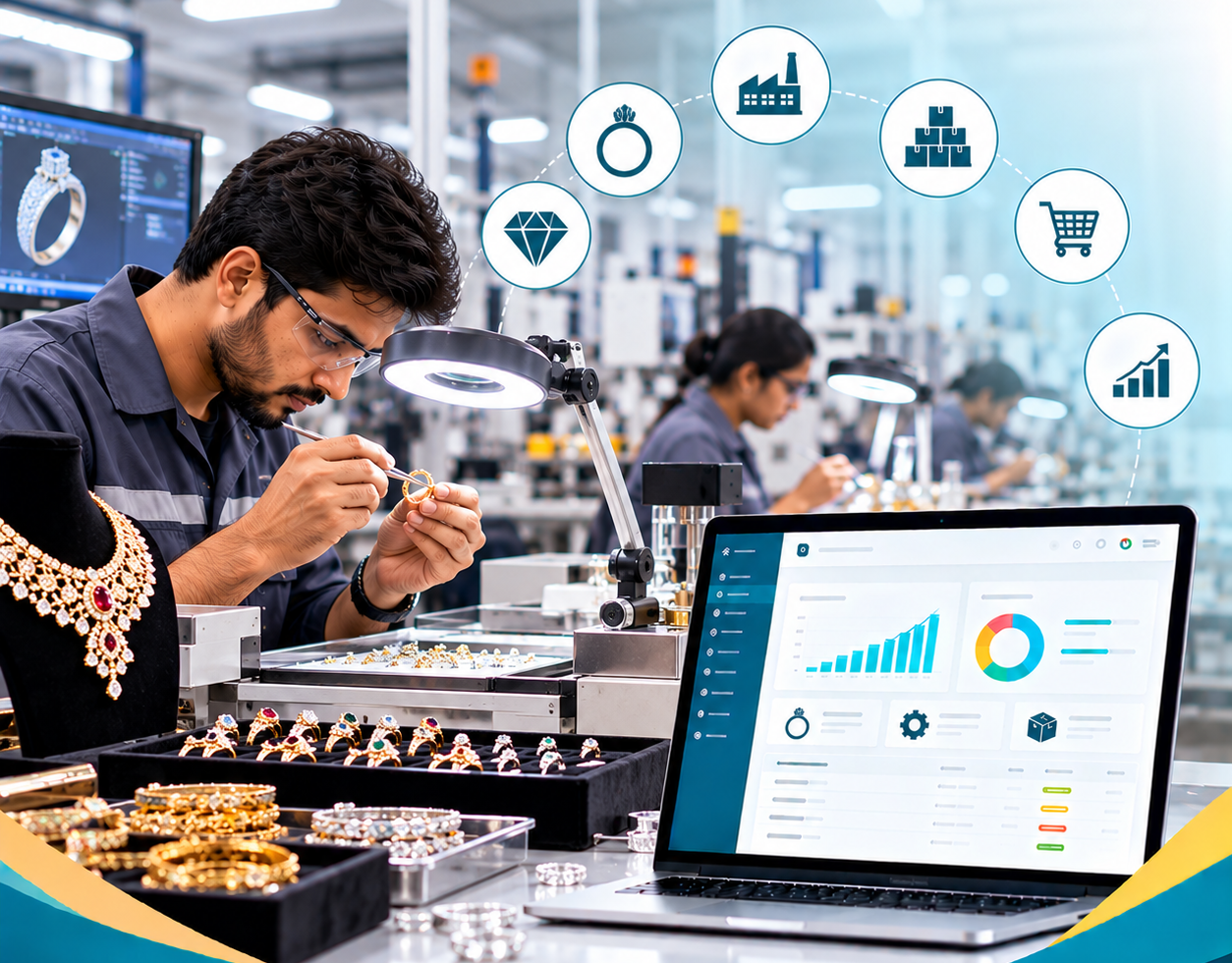
10. ERP for Gems and Jewellery Manufacturing:
Jewellery manufacturers manage precious metals, gemstones, purity standards, personalised designs, and accurate material records. Even minor discrepancies can increase production costs.
| Manufacturing challenge | Manufacturing ERP workflow | Expected benefit |
| Actual metal consumption differs from finished output | Manufacturing BoMs, lot tracking, and configured material reconciliation | Better control of valuable materials |
| Stones or components are misplaced | Inventory locations, product identification, and lot tracking where appropriate | Improved stock visibility |
| Custom designs have uncertain costs | Make-to-order workflows, design-specific BoMs, and recorded material consumption | Better order-wise cost estimation |
| Rework and material recovery are poorly documented | Quality checks and configured scrap, recovery, and rework records | Clearer material-loss reporting |
11. ERP for Furniture and Woodworking Manufacturing:
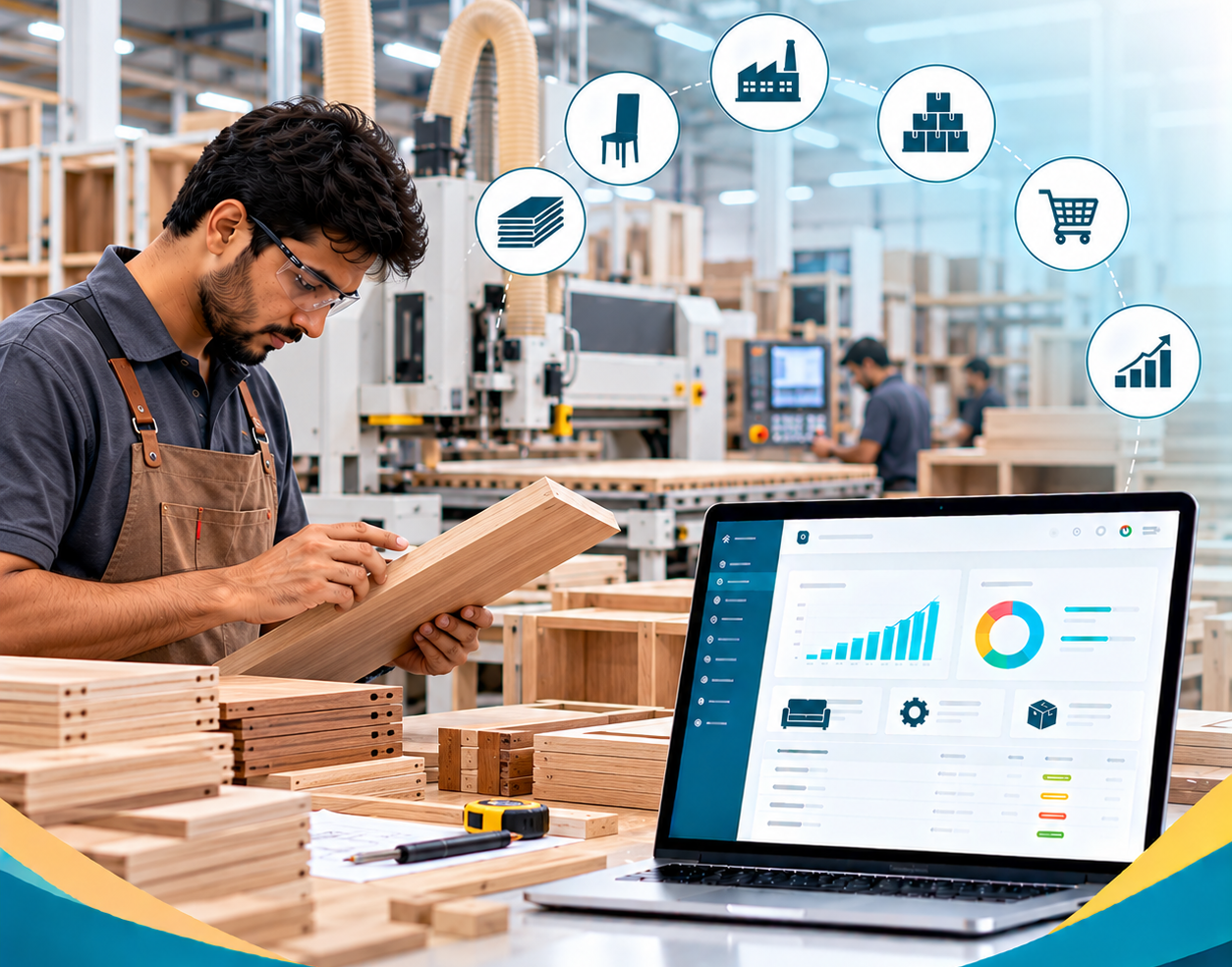
Furniture and woodworking businesses use timber, plywood, boards, fittings, finishes, and customised dimensions. Poor cutting plans and hardware shortages can delay customer orders.
| Manufacturing challenge | Manufacturing ERP workflow | Expected benefit |
| Excessive waste when cutting timber or boards | Bills of Materials (BoMs), manufacturing orders, and configured cutting-plan workflows | Improved material utilisation |
| Hardware shortages interrupt assembly | Inventory tracking, replenishment, and component reservations | Fewer assembly delays |
| Custom dimensions create costing errors | Product variants, customised BoMs, and make-to-order workflows | More accurate order estimates |
| Finishing defects require products to be reworked | Quality checks and configured inspections at the finishing stage | Better quality monitoring and rework control |
12. ERP for Toys and Sports Goods Manufacturing:
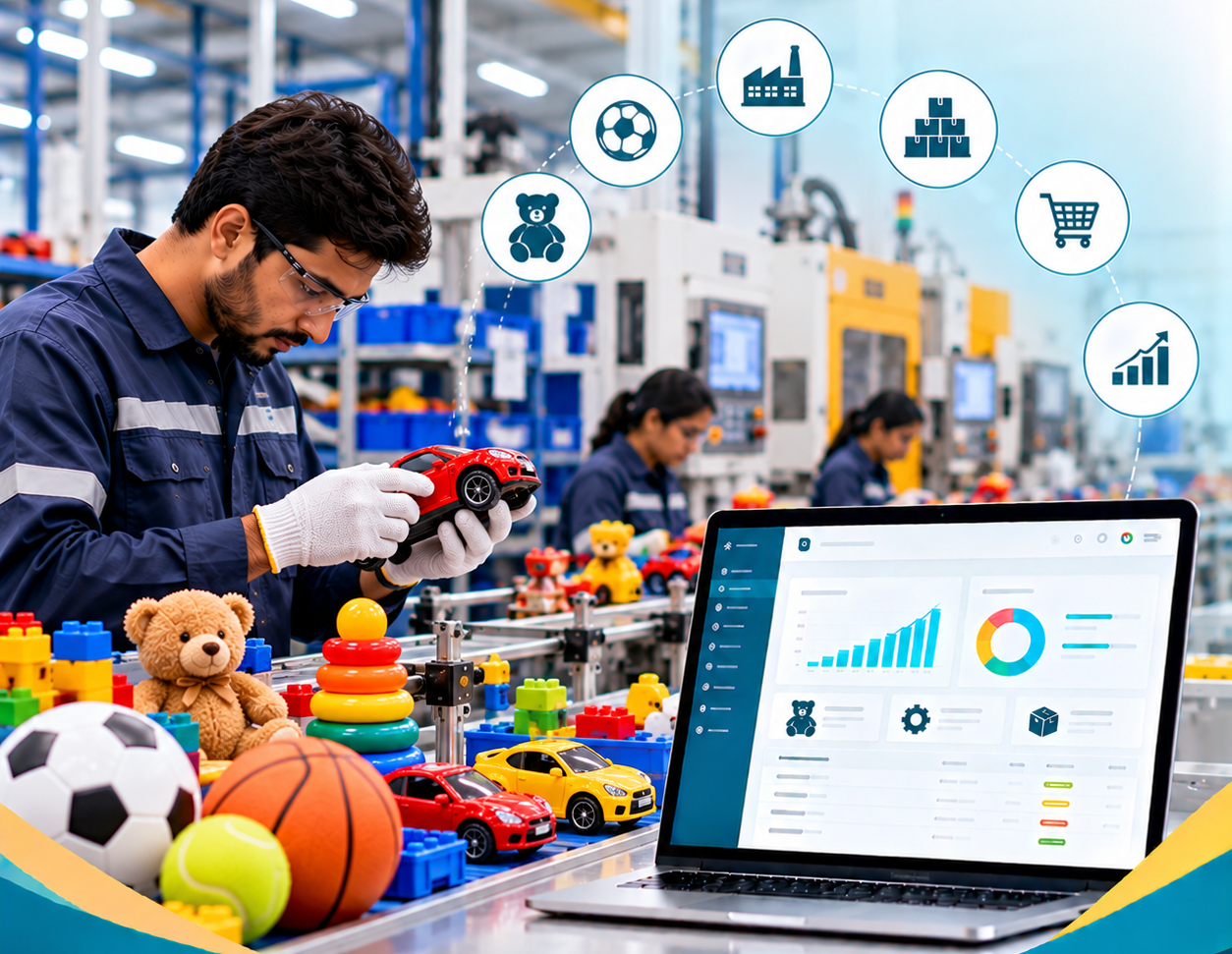
Toy and sports goods manufacturers manage varied components, materials, designs, packaging, and safety inspections. Product design changes and seasonal demand fluctuations can complicate production planning.
| Manufacturing challenge | Manufacturing ERP workflow | Expected benefit |
| Component shortages interrupt assembly | BoMs, replenishment rules, stock reservations, and manufacturing orders | Better production readiness |
| Product variations cause picking errors | Product attributes, variants, and variant-specific BoMs | Fewer assembly and dispatch errors |
| Safety or quality defects go unnoticed | Quality checks, inspection records, and configured defect categories | Better quality control and investigation |
| Seasonal demand causes stock imbalance | Demand forecasting and replenishment planning, based on available configuration | Better inventory planning and fewer avoidable shortages |
13. ERP for Agricultural Machinery Manufacturing:
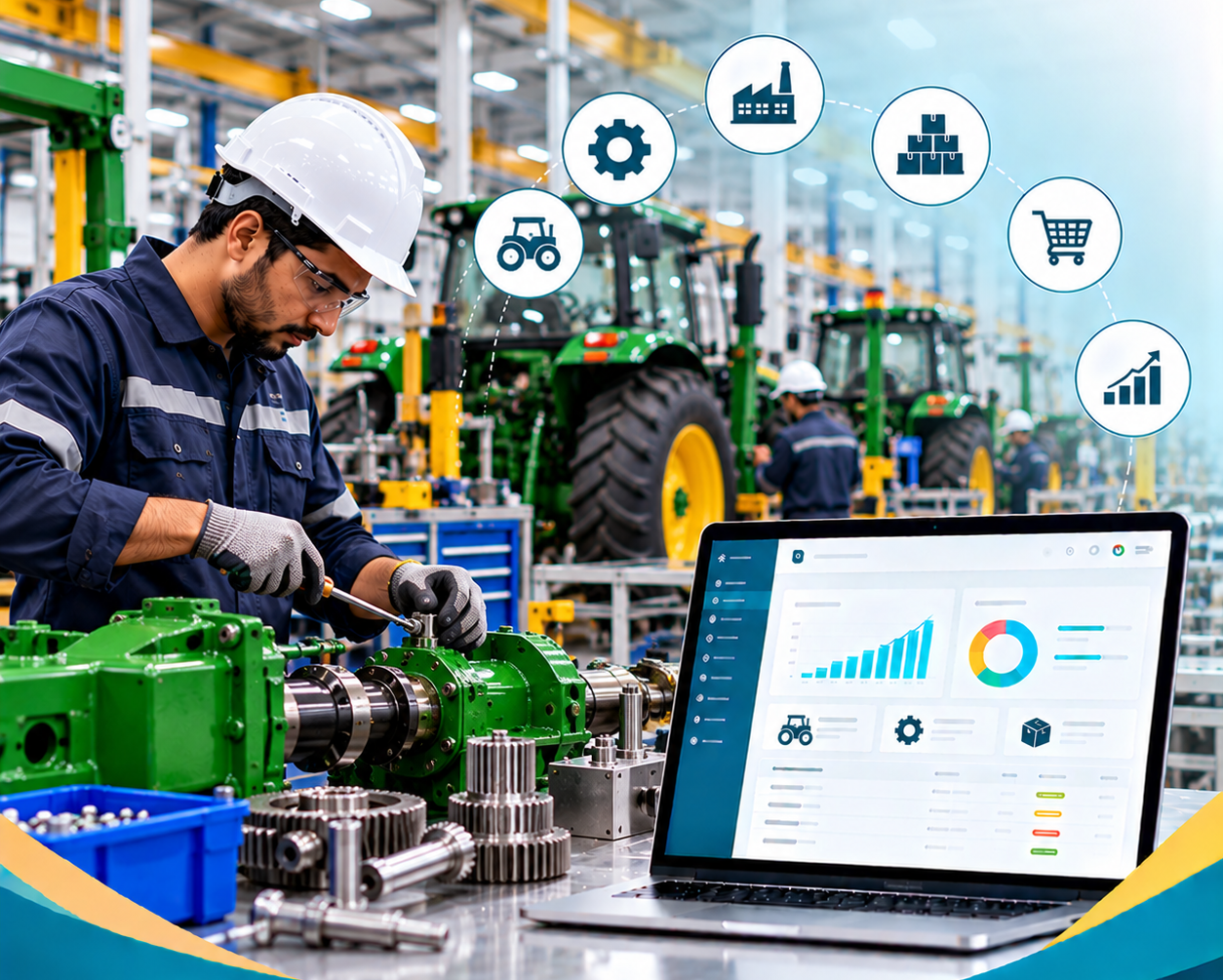
Agricultural machinery manufacturers coordinate fabricated frames, engines, hydraulic systems, spare parts, and assembly operations. Seasonal demand fluctuations and delayed supplier deliveries can disrupt production schedules.
| Manufacturing challenge | Manufacturing ERP workflow | Expected benefit |
| Critical components are unavailable | Multi-level BoMs, purchasing, replenishment, and manufacturing orders | Better component planning |
| Assembly bottlenecks delay dispatch | Routing, work orders, work centres, and operation sequencing | Improved production coordination |
| Rejected components increase rework expenses | Quality inspections, rejection records, and configured rework workflows | Better defect analysis and cost visibility |
| Spare parts and finished machines are difficult to trace | Lot or serial tracking and inventory management | Better traceability and service support |
How to Choose the Right Manufacturing ERP Software for Your Industry
Before selecting an ERP, map the complete production process—from purchase orders and incoming materials to manufacturing, quality inspection, finished goods, dispatch, and accounting.
A manufacturing ERP consultant should demonstrate your actual workflows and identify which requirements can be handled through standard features, configuration, custom development, or third-party integrations.
When evaluating an ERP software company in India, check its understanding of your production process, migration approach, employee training, testing plan, support arrangements, and implementation scope.
Odoo ERP software integrates manufacturing with other business operations, but results depend on data accuracy, appropriate workflows, effective implementation, and employee adoption.
Conclusion
Manufacturing efficiency relies on coordinating production, inventory, quality, and costing with each business’s operational needs. A well-planned Manufacturing ERP implementation can improve process visibility, reduce waste, and support better decision-making.
As an ERP software company in India, Teknovative Solution helps businesses evaluate their requirements and explore suitable Odoo ERP workflows with guidance from a manufacturing ERP consultant.
Read Also: Odoo vs ERPNext for Manufacturers: Can They Handle Complex Manufacturing?
Ready to Take Control of Your Manufacturing Operations?
Discover how Odoo ERP can streamline your production, inventory, and quality workflows. Find the right implementation approach for your factory with Teknovative Solution.
Rapid Assistance Zone
Manufacturing software can serve sectors such as food processing, automotive, pharmaceuticals, chemicals, plastics, electronics, machinery, packaging, furniture, leather and footwear, and gems and jewellery. Its value varies according to each industry's production methods, stock management needs, quality standards, and operational priorities.
Manufacturers can reduce costs by tracking actual material consumption against planned quantities, monitoring scrap and rejected products, improving inventory accuracy, and analysing production variances. Improved production scheduling and accurate cost reports help manufacturers pinpoint unnecessary spending.
High raw material costs, excess inventory, production delays, machine downtime, product rejection, material wastage, and inaccurate product costing can reduce profit margins even when sales are strong. Tracking these factors enables manufacturers to pinpoint the sources of profit loss.
Manufacturers need to account for raw materials, labour, machine or production overheads, scrap, and other relevant manufacturing expenses. Comparing planned costs with actual production costs helps businesses identify cost variations and assess product profitability more accurately.
Manufacturers operating on a small or medium scale can select the right software by assessing their current operations, business size, key requirements, initial investment, and future growth prospects. Starting with essential production, inventory, and accounting workflows can help control the initial investment, while additional capabilities can be introduced as requirements grow.
Manufacturers should evaluate production planning, Bills of Materials (BoMs), inventory tracking, quality control, traceability, costing, reporting, and integration requirements. Manufacturers should check whether the software fits their processes, identify necessary customisations, and calculate the overall costs of implementation and ongoing maintenance.