
Indian SMEs are growing faster than ever, but growth also brings new operational challenges. Managing sales, inventory, production, purchasing, and accounting through disconnected software or spreadsheets often leads to delays, stock mismatches, manual errors, and slower decision-making.
That's why choosing the right ERP software has become a business decision—not just an IT one. Among the most popular options, Odoo ERP software and SAP Business One are frequently compared by manufacturers and trading businesses looking to streamline operations and prepare for future growth.
Both are powerful ERP solutions, but they take different approaches. One focuses on flexibility and modular business management, while the other is known for its structured enterprise processes and financial controls.
In this article, we'll compare Odoo vs SAP Business One from the perspective of Indian SMEs. Rather than listing features, we'll evaluate how each ERP performs in real business scenarios, including manufacturing, inventory management, accounting, customization, implementation, and long-term return on investment.
Odoo vs SAP Business One: Quick Answer
For most growing Indian SMEs, Odoo ERP software offers better overall value by combining flexibility, modular pricing, modern usability, and a fully integrated business ecosystem. SAP Business One remains a strong choice for businesses that prefer standardized processes and advanced financial controls.
If you're looking for the short answer, here it is:
| If Your Business Needs… | Better Choice |
| Flexible and scalable ERP | Odoo ERP Software |
| Easy customization | Odoo ERP Software |
| Modern user interface | Odoo ERP Software |
| Manufacturing and inventory flexibility | Odoo ERP Software |
| Lower long-term ownership cost | Odoo ERP Software |
| Structured financial processes | SAP Business One |
| Standardized enterprise workflows | SAP Business One |
However, choosing an ERP isn't about deciding which software has more features. It's about understanding which ERP fits the way your business operates today and supports where you want to be tomorrow.
For example, a manufacturer that needs real-time production planning, automated inventory replenishment, and customizable workflows may benefit more from Odoo ERP software. On the other hand, a business with highly standardized financial and operational processes may find SAP Business One better aligned with its requirements.
Every business is different. Get expert guidance to compare Odoo ERP software and SAP Business One based on your manufacturing process, business goals, and future growth plans—before you invest.
Still Comparing ERP Solutions? Let's Find the Right Fit for Your Business.
Odoo ERP Software vs SAP Business One: Feature Comparison
Both Odoo ERP software and SAP Business One cover the essential functions an SME needs, including manufacturing, inventory, sales, purchasing, CRM, and accounting. The key difference isn't whether they have these features—it's how they help your team work faster, make better decisions, and adapt as your business grows.
Many ERP comparison blogs simply list features with checkmarks.
✔ Manufacturing
✔ Inventory
✔ CRM
✔ Accounting
That doesn't help you make a better decision because almost every modern ERP offers these modules.Instead, let's compare how both platforms perform in the areas that matter most to Indian manufacturers and trading businesses.
| Business Function | Odoo ERP Software | SAP Business One |
| Manufacturing (MRP) | Flexible production planning, multi-level BOMs, work orders, routing, subcontracting, quality integration | Strong manufacturing capabilities with structured workflows |
| Inventory Management | Multi-warehouse, barcode, batch & serial tracking, automated replenishment | Comprehensive inventory control with warehouse management |
| CRM & Sales | Fully integrated CRM, quotations, sales, marketing, website, helpdesk | Built-in CRM with sales management capabilities |
| Accounting | Integrated accounting with GST localization, invoicing, bank reconciliation, financial reports | Excellent financial management and reporting |
| Purchase Management | Automated RFQs, approval workflows, vendor management, procurement rules | Strong purchasing and supplier management |
| Customization | Highly flexible with Odoo Studio and custom modules | Customizable but often requires partner development |
| Reporting & Dashboards | Real-time dashboards with cross-module insights | Powerful business reports and analytics |
| Scalability | Add new apps and users as your business grows | Scalable for expanding businesses |
Manufacturing: Beyond Production Planning
For manufacturers, ERP isn't just about creating production orders. It's about ensuring that every department works together.
With Odoo, a confirmed sales order can automatically trigger material planning, inventory checks, purchase requirements, and manufacturing orders. Because modules are connected, production managers always have visibility into raw materials, work orders, machine capacity, and delivery schedules from a single dashboard.
SAP Business One also provides strong manufacturing capabilities and supports Bills of Materials (BOMs), production orders, and inventory integration. Businesses with standardized production processes often find it reliable, but adapting workflows to unique manufacturing requirements may require additional implementation effort.
Inventory Management: Better Visibility, Better Decisions
Inventory is one of the biggest investments for any manufacturing or trading business. Too much stock blocks working capital, while too little stock delays production and customer deliveries.
Odoo helps businesses maintain the right balance through features such as:
- Multi-warehouse management
- Barcode operations
- Batch and serial number tracking
- Reordering rules
- Safety stock levels
- Real-time inventory valuation
Instead of waiting until production stops, businesses receive alerts before critical materials run out, enabling more proactive procurement.
SAP Business One also offers dependable inventory management with warehouse control and stock tracking, making it suitable for businesses with structured inventory operations.
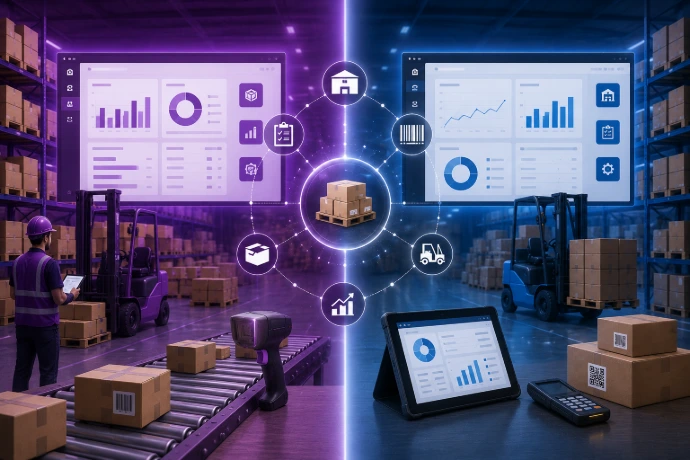
CRM, Sales and Accounting: One Connected Workflow
Many SMEs still manage leads in one system, prepare quotations in another, and record invoices separately. This creates duplicate work and increases the chance of errors.
With Odoo ERP software, the entire customer journey—from lead generation to quotation, sales order, delivery, invoicing, and payment—is connected. Information entered once flows across departments automatically, reducing manual data entry and improving accuracy.
On the finance side, Odoo integrates accounting directly with inventory, manufacturing, purchasing, and sales. This gives management a real-time view of profitability, receivables, cash flow, and inventory value.
SAP Business One is particularly strong in financial management and has earned a solid reputation for accounting, compliance, and reporting. For businesses where finance is the primary focus, it continues to be a trusted choice.
Cost, Implementation & ROI Comparison
The true cost of an ERP goes beyond licensing. Implementation, customization, training, maintenance, and future upgrades all affect your return on investment (ROI). For many Indian SMEs, Odoo offers a lower total cost of ownership because businesses can start with the modules they need and expand as they grow.
Choosing an ERP based only on the initial price can be expensive in the long run.
Imagine buying a machine because it's cheaper, only to discover later that maintenance, spare parts, and upgrades cost more than the machine itself. ERP works in a similar way. The software license is only one part of the investment. The real question is:
Which ERP will deliver better value over the next five years?
Cost Comparison: Odoo vs SAP Business One
| Cost Factor | Odoo ERP Software | SAP Business One |
| Initial Investment | Start with required modules, making it budget-friendly for SMEs | Higher upfront investment depending on licensing and implementation scope |
| Implementation | Flexible, phased implementation | More structured implementation approach |
| Customization | Easier to modify as business procedures change | Advanced customisation frequently necessitates specialized development. |
| User Training | Modern interface helps users learn faster | May require more training for new users |
| Future Expansion | Add new modules as business grows | Expansion may involve additional implementation and licensing considerations |
| Total Cost of Ownership | Generally lower for growing SMEs | Can be higher as customization and expansion increase |
Why Flexibility Matters More Than Price?
No business remains the same for long.
A company that starts with 20 employees may have 100 employees in a few years. You may open another warehouse, launch a new product line, or expand into exports.
Your ERP should support these changes without forcing you to replace the entire system.
This is where Odoo ERP software stands out. Its modular architecture allows businesses to activate additional applications—such as Quality, Maintenance, PLM, Field Service, or Helpdesk—only when they're needed. This keeps the ERP aligned with business growth while avoiding unnecessary complexity.
SAP Business One is also scalable, but expanding functionality often requires additional planning, partner involvement, or integrations depending on the business requirement.
Which ERP Delivers Better ROI?
ROI isn't calculated by how many features an ERP offers. It's measured by how much time, money, and effort it saves every day.
Businesses typically see the greatest return when an ERP helps them:
- Reduce manual data entry
- Improve inventory accuracy
- Shorten production planning time
- Speed up purchase approvals
- Minimize stock shortages
- Deliver customer orders on time
- Make faster decisions using real-time reports
For example, if your production team spends hours every week updating Excel sheets and coordinating inventory manually, an integrated ERP can eliminate much of that effort. Even saving a few hours each day across departments can significantly improve productivity over a year.
ROI Snapshot
| Business Goal | ERP That Offers Strong Advantage |
| Faster implementation | Odoo ERP Software |
| Lower long-term ownership cost | Odoo ERP Software |
| Flexible business growth | Odoo ERP Software |
| Strong financial governance | SAP Business One |
| Easy process automation | Odoo ERP Software |
| Better value for most growing SMEs | Odoo ERP Software |

Why More Indian SMEs Are Choosing Odoo ERP Software?
Indian SMEs are no longer looking for an ERP that simply records transactions. They want a platform that improves productivity, connects departments, and grows with their business. This shift is one of the biggest reasons why Odoo has become a preferred ERP choice for manufacturers and trading companies across India.
Selecting an ERP isn't just about solving today's challenges—it's about preparing your business for the next five to ten years.
Many SMEs start with one manufacturing unit, a handful of employees, and a local customer base. As the business grows, they add new products, warehouses, sales teams, and even multiple companies. The ERP should scale with your business, not force you to start from scratch.
That's where Odoo ERP software has an edge.
One Platform Instead of Multiple Software
A common challenge we see in Indian SMEs is the use of separate software for different departments.
For example:
- Sales team uses a CRM.
- Accounts team uses accounting software.
- Production team updates Excel sheets.
- Inventory is managed in another application.
- Management depends on manual reports.
The result? Duplicate data, delayed decisions, and disconnected teams become everyday challenges.
With Odoo ERP software, all major business functions work on a single platform. A sales order can automatically trigger inventory reservation, purchase planning (if stock is low), manufacturing orders, delivery, invoicing, and payment tracking. Every department works with the same real-time information, reducing manual coordination and improving accuracy.
Final Verdict: Which ERP Should You Choose?
Both Odoo ERP software and SAP Business One are capable ERP solutions, but they are designed with different priorities in mind. Your decision should depend on your business model, growth plans, operational complexity, and long-term goals—not simply on brand recognition or the number of features.
After comparing manufacturing, inventory, accounting, CRM, implementation, customization, and long-term cost, one thing becomes clear:
There is no universal "best ERP." There is only the ERP that best fits your business.
If your business follows highly standardized processes, places significant emphasis on financial governance, and prefers a structured ERP environment, SAP Business One continues to be a dependable choice.
However, if you're a growing manufacturer or trading business looking for a modern, flexible, and scalable ERP, Odoo ERP software offers a strong advantage. Its modular approach allows you to start with the applications you need today and expand as your business evolves—without replacing your ERP platform.
Read Also: Stop Material Shortages: How Odoo ERP Automates Procurement for Modern Manufacturers
Discover how the right ERP can streamline production, improve inventory control, automate daily operations, and give you real-time visibility across your entire business with Odoo ERP software.
Don't Just Buy an ERP. Build a Smarter Business.
Rapid Assistance Zone
For most growing Indian SMEs, Odoo offers better value because it is modular, flexible, easier to customize, and supports manufacturing, inventory, sales, CRM, and accounting on a single platform. SAP Business One is better suited for businesses with highly structured financial and operational processes.
Yes. Odoo includes dedicated Manufacturing (MRP), Inventory, Quality, Maintenance, Purchase, and PLM modules. These applications help manufacturers manage production planning, Bills of Materials (BOM), work orders, inventory, quality checks, and procurement from one integrated system.
The biggest difference is flexibility. Odoo ERP software allows businesses to add modules and customize workflows as they grow, while SAP Business One focuses more on structured processes and predefined business operations.
Odoo is generally easier to customize because of its modular architecture and tools like Odoo Studio. Businesses can adapt workflows, forms, reports, and dashboards with less complexity compared to many traditional ERP systems.
For many SMEs, Odoo has a lower total cost of ownership because businesses can implement only the modules they need and expand later. The overall investment depends on business size, customization, implementation scope, and user requirements.
Yes. Odoo supports multi-warehouse management, barcode operations, batch and serial tracking, stock transfers, automated replenishment, and real-time inventory visibility, making it suitable for businesses managing inventory across multiple locations.
SAP Business One is widely recognized for its robust financial management and reporting capabilities. However, Odoo also provides comprehensive accounting features while integrating finance seamlessly with sales, purchasing, inventory, and manufacturing operations.
Start by evaluating your business processes rather than comparing feature lists. Consider your industry, operational challenges, future expansion plans, customization needs, budget, and implementation partner before making a decision.